
 United States
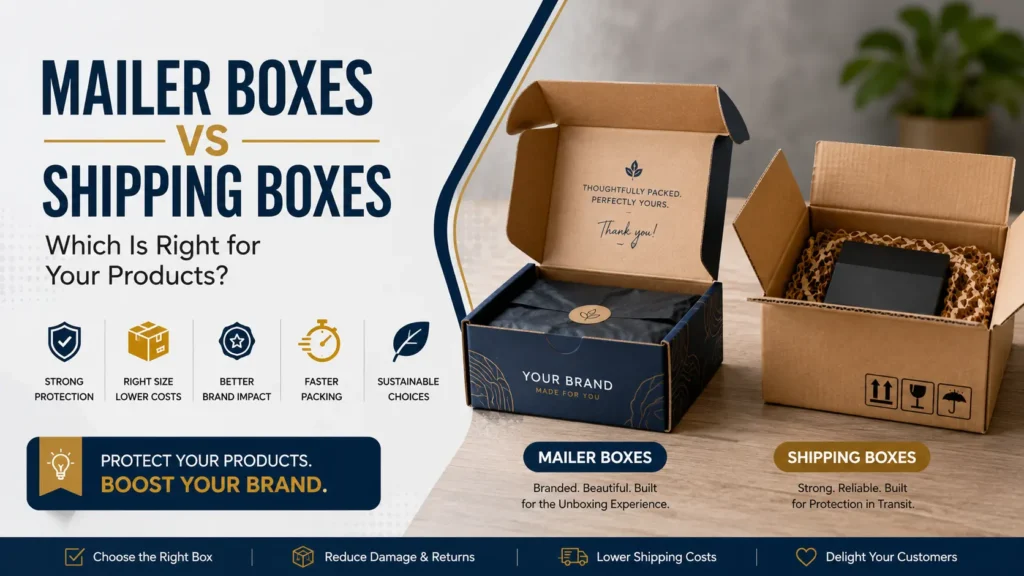
A box that looks fine in the warehouse can fail once it enters a courier network. Products can move, corners can crush, tape can split, and oversized parcels can raise delivery costs. These problems lead to damaged orders, refunds, poor reviews, and extra packing work. That is why the choice between mailer boxes vs shipping boxes matters more than it first appears.
Both box types can protect products, but they are built for different jobs. Mailer boxes often suit branded ecommerce orders, gifts, clothing, cosmetics, and lighter goods. Shipping boxes are usually better for heavy, bulky, fragile, or multi-item orders. The right choice depends on product weight, box strength, postage size, branding needs, and how the parcel will be handled. A good box should protect the item without adding waste, cost, or packing delays.
The Wrong Box Can Raise the Cost of Every Order
Packaging costs do not stop at the price of the box. The wrong design can affect almost every stage of fulfilment.
A poor box choice may cause:
- Higher courier fees
- More void fill and tape use
- Slower packing
- Damaged products
- More customer returns
- Extra storage needs
- A weak first impression
- Waste from boxes that are too large
A cheap box is not always the lowest-cost option. If it takes longer to pack or fails during delivery, the total cost can be much higher.
The real difference between mailer boxes and shipping boxes becomes clear when you compare how they close, how much weight they hold, how they protect products, and how they present a brand.
What Is a Mailer Box?
A mailer box is a foldable box with an attached lid and locking tabs. It usually closes without separate glue and may need little or no tape.
Many self-locking mailer boxes are made from corrugated board. Their folded sides help create a clean shape and improve strength around the edges.
Mailer boxes are often used for:
- Clothing
- Beauty products
- Subscription orders
- Books
- Small electronics
- Gifts
- Handmade goods
- Food items with inner protection
- Product launch kits
When customers ask what is a mailer box, the simplest answer is this: it is a neat, easy-to-open box made for packing, posting, and presentation.
The design often gives the customer a better opening experience than a standard taped carton. It also provides space for printed messages, colours, logos, and inside artwork.
What Is a Shipping Box?
A shipping box is a corrugated carton designed mainly for storage and transport. It often has top and bottom flaps that need tape to stay closed.
These boxes are widely used for:
- Heavy products
- Large products
- Fragile goods
- Bulk orders
- Multiple items
- Wholesale deliveries
- Warehouse shipments
- Products that need extra padding
When people ask what a shipping box is, they are usually referring to a regular slotted carton or another strong corrugated box made to survive handling and stacking.
Shipping boxes may look simpler than mailer boxes, but their structure can support more weight. They can also be made in stronger board grades for demanding delivery conditions.
The Main Differences Are Easy to See
The mailer box vs shipping box choice becomes easier when the main features are placed side by side.
| Factor | Mailer Boxes | Shipping Boxes |
| Best for | Light to medium products | Medium to heavy products |
| Closure | Locking tabs or tuck flap | Usually taped flaps |
| Presentation | Clean and premium | Functional and protective |
| Branding | Strong inside and outside print options | Usually branded on the outside |
| Assembly | Fast and simple | Simple but tape is often needed |
| Product fit | Often made for a close fit | Flexible for many product types |
| Strength | Good for suitable weights | Better for heavy loads |
| Customer opening | Neat and easy | More practical than decorative |
| Returns | Can be designed for reuse | Can be reused with fresh tape |
| Storage | Supplied flat | Supplied flat |
The terms mailing box vs shipping box and postal boxes vs shipping boxes are often used in similar searches. In the UK, “postal box” may describe a small mailer or carton designed to meet common parcel sizes. The exact name matters less than the structure, dimensions, and board strength.
Mailer Boxes Win When Presentation Matters
Mailer boxes are a strong choice when the packaging is part of the product experience.
A customer may see the box before they see the product. A clean opening, good print, and tidy fit can make the order feel more premium.
This makes corrugated mailer boxes useful for ecommerce brands that want to combine protection with presentation.
Key benefits include:
- Fast packing
- Less need for tape
- Strong branding space
- A neat unboxing experience
- Easy opening
- Good edge protection
- Custom sizes and inserts
- A professional look on arrival
Mailer boxes can also support repeat sales. A customer who receives a neat, reliable package is more likely to trust the brand again.
For products sold as gifts, the box may even remove the need for extra gift wrapping.
Shipping Boxes Work Harder Under Heavy Loads
Shipping boxes are usually the safer option when weight, size, and transit risk increase.
A larger carton gives more freedom to add padding, dividers, or several products. Stronger board grades can handle stacking and rough warehouse movement.
Shipping boxes are often better for:
- Glass products
- Bottles
- Machinery parts
- Homeware
- Large electronics
- Bulk clothing orders
- Wholesale packs
- Heavy food items
- Products sent with several accessories
A shipping carton may not create the same premium opening as a mailer. However, it offers more flexibility for difficult products.
The best packaging choice protects the product first. Branding should support the structure, not weaken it.
Strength Depends on More Than Box Style
A mailer box is not always weak, and a shipping box is not always strong. Board grade, flute type, size, fold design, and product weight all affect performance.
One useful comparison is single wall vs double wall cardboard boxes.
Single-wall cardboard
Single-wall board has one fluted layer between two flat paper liners.
It often suits:
- Light products
- Small ecommerce orders
- Clothing
- Cosmetics
- Books
- Inner retail packs
Double-wall cardboard
Double-wall board has two fluted layers and three liners.
It is often used for:
- Heavy goods
- Fragile products
- Large cartons
- Long delivery routes
- Stacked warehouse loads
- Products with sharp or dense parts
More board is not always better. A very strong box may add weight, cost, and storage space without giving a real benefit.
The right board grade should match the actual product and delivery risk.
Are Mailer Boxes Strong Enough for Posting?
The answer to our mailer boxes being strong enough for posting is yes, when the size, material, and product weight are suitable.
Mailer boxes can work well for many ecommerce orders. Their folded sides and locking structure can create good protection for light and medium goods.
However, they may not be suitable when:
- The product is very heavy
- The item has sharp edges
- The box has too much empty space
- The goods can break under pressure
- Several heavy items are packed together
- The parcel may face rough handling
A mailer should be tested with the real product before a large order is placed. The test should include packing, closing, shaking, stacking, and opening.
For extra confidence, request a sample and test it through your normal packing process.
Fragile Products Need More Than a Strong Outer Box
Good Packaging for fragile items controls movement and absorbs shock. A strong carton alone may not be enough if the product can slide or hit the box walls.
Useful protection may include:
- Cardboard inserts
- Dividers
- Moulded pulp
- Tissue paper
- Paper cushioning
- Corrugated wraps
- Corner protectors
- Air pillows
- Foam, where suitable
Void fill packaging should stop movement without overpacking the box. Too little filler can lead to impact damage. Too much can waste material and push pressure onto the product.
Businesses looking at mailer boxes for fragile items should focus on fit first. A close-fitting insert can often protect the item better than filling a large box with loose paper.
To prevent damage in transit, pack the product so that it cannot move freely when the closed box is gently shaken.
Do Mailer Boxes Need Tape?
Many people ask, do mailer boxes need tape before posting.
Some mailer boxes close with locking tabs and may stay shut without tape during normal handling. However, tape or a security label may still be useful when:
- The product is heavy
- The box is very full
- The parcel travels a long distance
- Extra tamper protection is needed
- The locking tabs feel loose
- The box may be returned
A strong self-locking design can reduce tape use, but the final choice should be based on security and courier handling.
For valuable products, a tamper-evident sticker or paper sealing strip can add trust without covering the whole box in plastic tape.
Postage Costs Start With Size as Well as Weight
Courier costs are often affected by both parcel weight and parcel size. This is why a large, half-empty box can cost more than expected.
When planning a box, consider:
- External length
- External width
- External height
- Packed weight
- Empty space
- Courier size limits
- Product protection
- Final sealed shape
The Royal Mail parcel size guide should be checked when you plan packaging for UK deliveries. Parcel limits and service rules can affect which box size gives the best value.
Do not design a box only around the product. The outer size after closing may decide which service band the parcel enters.
How to Measure a Box for Shipping
Businesses often measure only the product and then order a box with the same dimensions. This leaves no room for safe packing.
Here is how to measure a box for shipping:
- Measure the product’s length, width, and height.
- Include any parts that stick out.
- Add space for inserts or padding.
- Check how the product will sit inside.
- Confirm the finished internal size.
- Check the outer size against courier limits.
- Test the packed box before full production.
The internal box dimensions are the usable space inside the package. External dimensions include the thickness of the board and can be slightly larger.
This difference matters when a parcel is close to a courier size limit.
Volumetric Weight Can Change the Final Cost
Volumetric weight for shipping is a pricing method based on how much space a parcel takes up, not only how heavy it is.
A large light box may be charged as if it weighs more because it uses more space in a delivery vehicle.
Right-sized packaging can help reduce:
- Empty space
- Filler use
- Storage needs
- Parcel volume
- Transport waste
- Unexpected delivery fees
A mailer box can be a good choice when it provides a close fit. A shipping box may be better when extra room is needed for safe cushioning.
The cheapest box is not always the one with the lowest unit price. A better-sized box may reduce the total cost of packing and delivery.
Which Is Cheaper: Mailer Boxes or Shipping Boxes?
The answer to which is cheaper mailer boxes or shipping boxes depends on the design and order.
A plain shipping carton often has a lower unit price than a fully printed mailer box. However, the total cost may change once tape, filler, packing time, branding, and postage are included.
Mailer boxes may save money through:
- Faster assembly
- Less tape
- Less filler
- Better product fit
- Built-in branding
- Lower return risk
- A better customer experience
Shipping boxes may save money when:
- Products are heavy
- Several items share one carton
- Basic print is enough
- Extra strength is needed
- Standard sizes already work
- Large volumes are shipped
Compare the full cost per packed order, not only the price of the empty box.
Branding Can Turn Delivery Into Marketing
Packaging is often the first physical contact an online customer has with a brand.
Mailer boxes give more room for:
- Full-colour exterior print
- Inside printing
- Brand messages
- Social media details
- Opening instructions
- Thank-you notes
- Product care information
- Reorder prompts
Shipping boxes can also carry branding. A one-colour logo, printed tape, or branded label can make a plain carton look more professional.
The level of print should match the product. A premium gift item may need a stronger visual impact. A heavy trade order may only need clear, reliable branding.
Small Businesses Need Packaging That Works Hard
Mailer boxes for small businesses can offer a useful mix of protection, branding, and easy packing.
They are especially helpful when a small team handles every order. A fast-folding box can reduce packing time and create a more consistent result.
Small businesses should consider:
- Minimum order quantity
- Storage space
- Number of box sizes
- Seasonal product changes
- Printing cost
- Packing speed
- Courier fees
- Product return rates
Using too many box sizes can make stock control difficult. One or two well-planned sizes may be more useful than a large range.
Start with the products that sell most often. Test the box, gather customer feedback, and expand only when needed.
Returns Should Be Part of the Box Design
Many ecommerce businesses choose packaging for the first delivery but forget the return journey.
Return-friendly Ecommerce packaging can include:
- A second sealing strip
- A tear-open strip
- Clear return instructions
- Strong folds that survive reopening
- Space for a return label
- A box that remains neat after opening
A customer should not need to find another box to return an item.
Mailer boxes can work well for returns if they include a second closure. Shipping boxes can also be reused when the customer applies fresh tape.
Easy returns can reduce customer stress and protect the product on its way back.
Recyclability Depends on the Full Design
Many customers now ask, are mailer boxes recyclable?
Most plain cardboard mailer boxes can be recycled when they are clean, dry, and free from hard-to-remove materials. The same applies to many recyclable corrugated boxes.
Recycling becomes harder when packaging includes:
- Plastic windows
- Foam inserts
- Heavy plastic lamination
- Magnets
- Mixed-material decorations
- Large amounts of plastic tape
Paper tape, card inserts, and simple printing can make disposal easier.
A sustainable box should also fit the product well. A large recyclable box may still waste more material and transport space than a smaller, better-designed one.
The Best Boxes for Ecommerce Shipping Match the Product
There is no single design that can be called the best boxes for ecommerce shipping in every case.
The right choice depends on what you sell.
| Product Type | Better Starting Option | Main Reason |
| Clothing | Mailer box | Light, branded, easy to open |
| Cosmetics | Mailer box with insert | Strong presentation and product fit |
| Books | Mailer or book wrap | Close fit and corner protection |
| Glass bottles | Shipping box with dividers | Better impact protection |
| Subscription goods | Printed mailer box | Strong unboxing experience |
| Heavy homeware | Double-wall shipping box | Better load strength |
| Small electronics | Mailer with insert | Good fit and branding |
| Wholesale orders | Shipping carton | More space and strength |
| Gift sets | Mailer or rigid-style mailer | Premium presentation |
| Mixed product orders | Shipping box with void fill | Flexible packing space |
A sample can reveal issues that are easy to miss on a screen. Test the box with the real product, filler, label, and tape before placing a larger order.
Common Box Choices That Cause Problems
Choosing by appearance alone
A premium box can still fail if the board is too weak.
Ignoring packed weight
The box must support the product, filler, inserts, and any added items.
Using too much empty space
Large gaps increase movement, filler use, and possible courier costs.
Forgetting the packing process
A box that is slow to fold can create labour costs across hundreds of orders.
Skipping delivery tests
A sample should be packed, stacked, opened, and handled before approval.
Using one box for every product
One standard size may seem simple, but it can create waste and poor protection.
Overlooking returns
A damaged or hard-to-reseal box can make the return process harder for customers.
How to Choose a Shipping Box With Confidence
When deciding how to choose a shipping box, start with risk rather than style.
Ask these questions:
- How heavy is the packed order?
- Is the product fragile?
- Does it have sharp edges?
- How much movement is safe?
- Will several products share one box?
- Does the parcel need strong branding?
- Is easy opening important?
- Will customers return items in the same box?
- Does the size fit the chosen courier service?
- Can staff pack it quickly?
Choose a mailer box when branding, speed, and presentation matter and the product weight is suitable.
Choose a shipping box when strength, space, and transport protection matter more than the opening experience.
When the choice is still unclear, request samples of both styles and test them under real packing conditions.
The Right Box Protects More Than the Product
The best packaging protects the item, the customer experience, and the profit behind each order.
Mailer boxes can help a brand create a premium, simple, and memorable delivery. Shipping boxes offer reliable strength for heavy, fragile, or mixed orders. Neither option is automatically better. The right box is the one that fits the product, delivery route, budget, and customer expectations.
99 Custom Boxes provides custom mailer and shipping packaging for businesses across the UK. Size, material, print, inserts, and board strength can be adjusted around your product and order needs.
Need help comparing the two options? Talk to our expert team about your product weight, dimensions, delivery method, and branding goals.
Want to test the fit and strength before placing a larger order? Request a sample using your real product.
For clear pricing on custom mailers or shipping boxes, Get a free quote from 99 Custom Boxes.
Frequently Asked Questions
What is the main difference between mailer boxes and shipping boxes?
Mailer boxes focus on easy opening, presentation, and light-to-medium products. Shipping boxes focus on strength, flexibility, and heavier orders.
Are mailer boxes good for shipping?
Yes. Mailer boxes are good for shipping when the product weight, box size, and board strength are suitable for the delivery journey.
Are mailer boxes strong enough for posting?
They can be strong enough for clothing, cosmetics, books, gifts, and many ecommerce goods. Heavy or fragile products may need a stronger board or a shipping carton.
Do mailer boxes need tape?
Many self-locking mailer boxes can close without tape, but tape or a security seal may be useful for heavy, valuable, or long-distance orders.
Which is cheaper, mailer boxes or shipping boxes?
Plain shipping boxes often cost less per unit, while mailer boxes may reduce tape, filler, packing time, and branding costs.
Can mailer boxes be used for fragile items?
Yes, when they include a close fit, suitable board strength, and protective inserts. Very fragile or heavy items may need a stronger outer carton.
Are mailer boxes recyclable?
Most cardboard mailer boxes can be recycled when they are clean and do not contain hard-to-remove plastic, foam, or mixed materials.
What box is best for ecommerce shipping?
Mailer boxes often suit branded light products, while shipping boxes are better for heavy, bulky, fragile, or mixed orders.
Should I use single-wall or double-wall cardboard?
Single-wall board often suits lighter goods. Double-wall board provides more strength for heavy products, large cartons, or demanding delivery routes.
How much space should be left inside a shipping box?
Leave enough room for suitable padding or inserts, but avoid large empty gaps that allow movement and raise parcel size.
Can shipping boxes be branded?
Yes. Shipping boxes can use printed logos, colours, labels, branded tape, and product-handling messages.
How can I reduce damage during delivery?
Use the correct box strength, limit product movement, protect weak areas, add suitable void fill, and test the packed box before bulk production.