
 United States
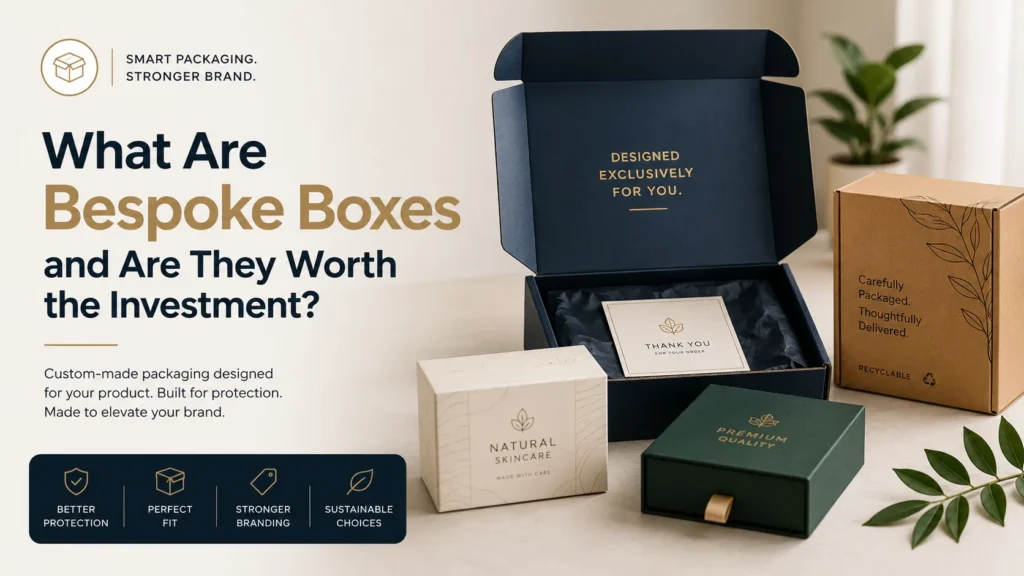
Poor packaging can cost more than most businesses expect. A box that is too large needs extra filling. A weak box can lead to damaged goods, refunds, bad reviews, and repeat delivery costs. Packaging that looks plain may also make a premium product feel cheap. So, what are bespoke boxes, and can they solve these problems without pushing your costs too high?
Bespoke boxes are made around the exact needs of a product and brand. Their size, shape, material, print, and finish can all be adjusted. This makes them useful for businesses that want better protection, lower waste, and a stronger customer experience. However, they are not always the cheapest choice for every order. The real value depends on your product, sales volume, shipping method, and brand goals.
What Are Bespoke Boxes, Really?
Bespoke boxes are packaging solutions created to meet a specific product or business need. Unlike ready-made boxes, they are not limited to standard sizes, plain colours, or basic structures.
The simple bespoke packaging meaning is packaging made to order. It may include:
- A Custom box size
- A unique shape or opening style
- Printed logos and brand colours
- Protective inserts
- Special coatings or finishes
- Recycled or lower-waste materials
- A structure designed for posting, retail, or gifting
When people ask what is bespoke packaging, they are often thinking only about printed boxes. Printing is one part of it, but the box structure matters just as much.
A box can be bespoke even without complex artwork. For example, a plain corrugated box made to fit an unusual product is still bespoke because its size and build have been designed for that item.
A Better Fit Solves More Than a Size Problem
A poor-fitting box can create several hidden costs. The product may move during delivery. More void fill may be needed. The parcel may take up extra warehouse space. It may also fall into a higher courier size band.
Right-sized packaging reduces empty space while leaving enough room for protection. This can help a business:
- Use less filler material
- Pack orders faster
- Store more flat boxes
- Lower the risk of movement in transit
- Create a cleaner presentation
- Avoid paying to ship empty space
A tight fit is not always the goal. Fragile products may need room for foam, paper, or corrugated protection. The right size depends on the product and how it travels.
That is why good packaging design looks at the full journey, not only the measurements of the product.
Stock Packaging vs Bespoke Packaging Is a Business Decision
The choice between stock packaging vs bespoke packaging depends on cost, volume, product shape, and customer expectations.
| Factor | Stock Packaging | Bespoke Packaging |
| Initial cost | Usually lower | Usually higher |
| Setup time | Fast | Requires design and approval |
| Product fit | General fit | Made for the product |
| Branding | Limited | Fully customisable |
| Protection | May need extra filler | Can include built-in protection |
| Order quantity | Often available in small packs | Minimum orders may apply |
| Customer experience | Functional | More memorable and premium |
Stock boxes can work well for early-stage businesses, low order volumes, or products with simple shapes.
Bespoke packaging becomes more useful when:
- Products arrive damaged in standard boxes
- Too much void fill is being used
- Packaging looks weak next to competitors
- Shipping costs are affected by box size
- Several parts must stay in place
- A premium brand needs a stronger presentation
- Customers share unboxing content online
The best choice is not always the most decorative box. It is the option that protects the product, fits the budget, and supports the way the business sells.
The Main Benefits Go Beyond Good Looks
The benefits of bespoke packaging can affect sales, operations, and customer trust.
Products stay better protected
A box designed around the product limits unwanted movement. It can also include reinforced walls, sleeves, or custom inserts.
Better protection can mean:
- Fewer damaged deliveries
- Fewer refunds and replacements
- Less time spent handling complaints
- A more reliable customer experience
Your product feels more valuable
Customers judge a product before they use it. A neat box with a strong fit and clear branding can make the item feel more premium.
This is one of the main advantages of custom packaging. It shapes how customers see the product before they open it.
Branding becomes easier to remember
Colours, logos, messages, and finishes can create a clear brand identity. When the outside and inside work together, the package feels planned rather than generic.
A strong branded unboxing experience can also encourage:
- Social media sharing
- Customer reviews
- Gift purchases
- Repeat orders
- Word-of-mouth recommendations
Packing can become quicker
A well-designed box may need less tape, less filler, and fewer packing steps. Small time savings matter when hundreds of orders are packed each week.
How Does Bespoke Packaging Work in Practice?
When businesses ask how bespoke packaging works, the process usually follows a set path.
1. The product is measured
Length, width, height, weight, shape, and fragile areas are reviewed. The measurements must include anything packed with the product, such as manuals, cables, bottles, or accessories.
2. The box structure is chosen
The supplier recommends a style based on how the box will be used. Options may include:
- Folding cartons
- Mailer boxes
- Corrugated shipping boxes
- Rigid gift boxes
- Sleeves
- Drawer boxes
- Tube packaging
- Display boxes
3. A dieline is prepared
Many first-time buyers ask, ” What is a packaging dieline?
A dieline is a flat design template. It shows where the box will be cut, folded, glued, and printed. Designers use it to place logos, text, colours, and images in the correct positions.
4. Artwork and finishes are added
The design is placed on the dieline. The business can also choose coatings, foiling, embossing, windows, or textured paper.
5. A sample may be produced
A sample helps check size, structure, artwork, and opening style before the main order begins.
6. Production starts after approval
Once the structure and artwork are approved, the boxes move into production, finishing, quality checks, and delivery.
This bespoke packaging design process may sound complex, but clear product details make it much faster.
Good Design Starts Before the Printing Press
Strong structural packaging design focuses on how the box performs. It looks at weight, pressure, stacking, opening, storage, and delivery risks.
A beautiful box can still fail if the board is too thin or the closure opens during shipping.
Before approving a design, check:
- Will the base hold the product’s weight?
- Can the box survive stacking?
- Is the opening easy for the customer?
- Does the product move when the box is shaken?
- Will the print crack along fold lines?
- Can staff assemble it quickly?
- Does it need tape or glue?
- Is it easy to recycle after use?
Packaging prototype testing can uncover these problems before a full order is made. A plain, unprinted sample is often enough to test fit and strength.
Businesses searching for custom packaging samples in the UK should ask whether the sample is:
- A plain structural sample
- A digitally printed sample
- A full production sample
- Charged separately
- Deducted from a later bulk order
A sample may add time at the start, but it can prevent an expensive mistake.
Small Details Can Change the Whole Experience
Several design choices can make custom-made packaging boxes more useful and attractive.
Custom box inserts
Custom box inserts keep products in place and improve presentation. Common options include:
- Corrugated cardboard inserts
- Folded board inserts
- Foam inserts
- Moulded pulp trays
- Paper padding
- Dividers
The right insert depends on the weight, shape, value, and fragility of the item.
Cardboard and moulded pulp can be good choices for businesses that want easier recycling. Foam may offer more protection for delicate items, but can be harder to recycle.
Printing and finishing choices
Common packaging printing and finishing options include:
- Full-colour printing
- Single-colour printing
- Matt lamination
- Gloss lamination
- Soft-touch coating
- Foil stamping
- Embossing
- Debossing
- Spot UV
- Die-cut windows
- Inside printing
Not every box needs several finishes. One strong detail often creates a better result than too many effects.
For example, a simple logo, clean typography, and one foil area may look more premium than a busy design with several colours and messages.
How Much Does Bespoke Packaging Cost?
The answer to how much bespoke packaging costs depends on the size, material, quantity, print coverage, structure, and finish.
The main cost factors include:
- Box dimensions
- Board type and thickness
- Number of printed colours
- Printing method
- Special finishes
- Inserts
- Tooling or cutting forms
- Sample requirements
- Order quantity
- Delivery location
- Packing and storage needs
The bespoke packaging cost UK businesses receive can vary widely because two boxes of the same size may use very different materials and finishes.
A plain corrugated mailer with one-colour print will usually cost less than a rigid gift box with foam inserts, foil, and magnetic closure.
Quantity has a major effect
The bespoke packaging minimum order quantity is the lowest number of units a supplier will produce for one design.
Minimum quantities exist because custom production may require:
- Machine setup
- Printing plates
- Cutting tools
- Material preparation
- Colour matching
- Quality checks
Larger orders often lower the price per box. However, ordering too many can create storage costs or waste if the design changes.
Ask for quotes at two or three quantity levels. This makes it easier to see where the best value begins.
Lead time should be part of the cost
Bespoke packaging lead times can be longer than stock-box delivery times. Time is needed for design, samples, approval, production, finishing, and shipping.
Plan early if the packaging is needed for:
- A product launch
- Christmas orders
- A trade event
- A seasonal gift range
- A subscription-box release
- A retail campaign
Rush orders may be possible, but they can reduce your options or increase the price.
Is Bespoke Packaging Worth It?
The answer to whether bespoke packaging is worth it depends on whether it solves a costly or important problem.
It may be worth the investment when it helps you:
- Reduce damage and returns
- Improve shelf impact
- Build a premium image
- Lower packing time
- Use less filler
- Improve the delivery of the presentation
- Support higher product prices
- Create better customer retention
It may not be the right choice when:
- Order volumes are very low
- The product design changes often
- The business has little storage space
- A standard box already fits well
- The packaging cost is too high for the product margin
A useful way to decide is to compare the extra packaging cost with the value it may protect or create.
For example, paying a little more for a stronger box may be sensible if it prevents regular product damage. A premium finish may also make sense if better presentation supports gifting or a higher selling price.
Small Businesses Need Flexibility, Not Waste
Choosing custom packaging for small business UK orders can feel difficult because minimum quantities and setup costs matter more at lower volumes.
Small brands can control costs by starting with the features that have the biggest impact.
A practical first order may include:
- One box size
- One print colour
- A standard board grade
- No complex finish
- A branded sticker or sleeve
- A recyclable insert
- A smaller test quantity
Not every brand needs a luxury rigid box. A clean corrugated mailer with sharp print can still look trusted and professional.
Requesting a sample before ordering helps protect a limited budget. It also lets the business test packing speed, product fit, and customer response.
Ecommerce Packaging Has Two Jobs
Bespoke packaging for ecommerce must protect the product and represent the brand. A retail box may sit safely on a shelf, but an ecommerce box must handle courier networks, stacking, movement, and changing weather.
Useful ecommerce packaging should be:
- Strong enough for delivery
- Easy to assemble
- Simple to close
- Sized to reduce empty space
- Easy for customers to open
- Suitable for returns where needed
- Clear about recycling
- Presentable when it arrives
The best bespoke cardboard boxes balance strength with weight. Adding more material is not always the answer. Better folds, board grades, and inserts can improve performance without making the package too heavy.
Some useful bespoke packaging examples for ecommerce include:
- A self-locking mailer for clothing
- A reinforced bottle box with dividers
- A subscription box with inside printing
- A book mailer with corner protection
- A cosmetics box with a card insert
- A return-friendly box with a second sealing strip
Sustainability Is About the Whole Pack
Sustainable bespoke packaging is not only about placing a recycling logo on a box. It should reduce waste across materials, storage, delivery, and disposal.
Useful choices include:
- Right-sized boxes
- Recycled or responsibly sourced board
- Water-based inks
- Paper-based inserts
- Fewer mixed materials
- Less plastic lamination
- Clear recycling instructions
- Designs that use less void fill
Recycled cardboard packaging can be a strong choice, but recycled content alone does not make every package sustainable. A large box filled with extra paper may still use more resources than a smaller box made from carefully chosen materials.
Simple packs are often easier to recycle. If a customer must remove magnets, foam, plastic windows, and coated layers, the box may end up in general waste.
Common Mistakes Can Make Custom Packaging Expensive
Bespoke packaging adds value only when the details are correct.
Avoid these common problems:
Using product measurements only
Allow space for inserts, padding, manuals, and product movement. Internal and external box sizes are not the same.
Choosing style before function
A luxury finish cannot fix a weak structure. Start with protection and usability.
Skipping the sample
Screens cannot show true size, board strength, fold resistance, or opening feel.
Ordering too much too early
Large quantities may reduce unit costs but increase storage and design-change risk.
Adding every premium finish
Too many finishes can raise costs and make the design feel busy.
Ignoring the packing team
A slow box design increases labour time. Ask the people who pack orders to test the sample.
Forgetting courier rules
The wrong dimensions may increase delivery charges even when the product is light.
A Simple Way to Decide
Bespoke boxes may be a strong choice when you can answer “yes” to several of these questions:
- Does your product need a better fit?
- Are damaged orders costing money?
- Do you use too much void fill?
- Does the current packaging look weaker than the product?
- Is unboxing important to your customers?
- Could a better box improve packing speed?
- Would stronger branding support repeat sales?
- Can you order enough units to reach a sensible price?
- Will the design stay in use for several months?
If the main goal is only to place a logo on a box, a printed stock size may be enough.
If you need a specific structure, better protection, custom dimensions, and a stronger brand experience, full bespoke packaging is more likely to provide value.
Packaging Should Earn Its Place in Your Budget
The best packaging is not always the cheapest or the most decorative. It should protect the product, support smooth operations, and help customers feel confident about their purchase.
99 Custom Boxes creates custom packaging for UK businesses across ecommerce, retail, gifting, cosmetics, food, and other sectors. The process can include structural advice, material selection, printed designs, inserts, and finishes based on your product and budget.
Unsure which box style will work? Talk to our expert team about your product size, weight, order quantity, and delivery needs.
Ready to check the fit before placing a larger order? Request a sample and test the box with your real product.
For clear pricing based on your chosen size, material, print, and quantity, Get a free quote from 99 Custom Boxes.
Frequently Asked Questions
What are bespoke boxes?
Bespoke boxes are custom-made packages designed around a product’s size, weight, protection needs, and branding.
What is the difference between custom and bespoke packaging?
The terms are often used in the same way, but bespoke packaging usually suggests a fully tailored size, structure, material, and design.
How much does bespoke packaging cost in the UK?
The price depends on the box size, material, print method, finish, inserts, and order quantity. A supplier needs these details to provide an accurate quote.
Is bespoke packaging worth it for a small business?
It can be worth it when better fit, protection, presentation, or packing speed creates more value than the extra cost.
What is the minimum order for bespoke boxes?
The minimum order depends on the box style and production method. Simpler printed boxes may have lower minimums than complex rigid or specialty packaging.
Can I order a sample before full production?
Yes, many packaging suppliers offer plain, printed, or production-quality samples so you can check fit and design before placing a bulk order.
How long does bespoke packaging take to produce?
Lead times vary based on sampling, design approval, material supply, finishing, and quantity. Planning early is important for launches and seasonal campaigns.
Are bespoke boxes recyclable?
Many bespoke boxes can be recyclable when made from paper or cardboard without hard-to-remove plastic, foam, magnets, or mixed coatings.
Can bespoke packaging reduce shipping costs?
Right-sized boxes may reduce parcel size, filler use, and volumetric weight. Final savings depend on the courier’s pricing rules.
Which products benefit most from bespoke packaging?
Fragile, premium, unusually shaped, gift-ready, and ecommerce products often benefit because fit, protection, and presentation are more important.
Can custom inserts be added to bespoke boxes?
Yes. Cardboard, moulded pulp, foam, and folded-board inserts can hold products in place and improve protection and presentation.
What information is needed for a bespoke box quote?
You usually need the product dimensions, weight, box quantity, preferred material, print requirements, finish, and delivery postcode.