
 United States
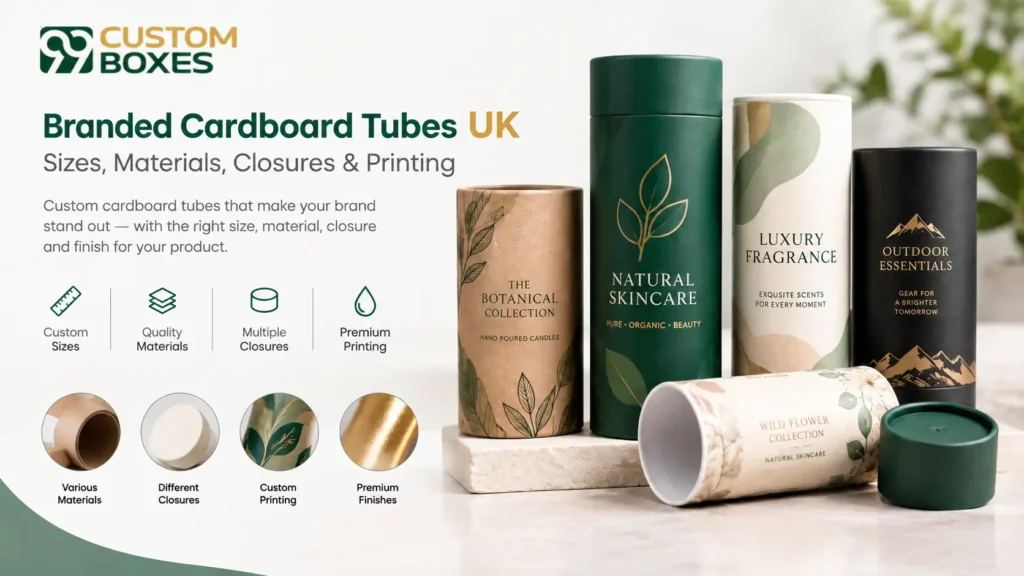
Branded cardboard tubes can make a product easier to recognise, more distinctive on a shelf, and more memorable when it arrives at a customer’s door. But good tube packaging is not simply a matter of adding a logo to a cylinder. The diameter, height, wall construction, closure, inserts, artwork and printing method all need to work together.
For UK businesses, the best approach is to specify the tube around the product first and the artwork second. A well-planned tube should fit the product without unnecessary movement, provide the right level of protection, give the customer a practical opening experience, and leave enough usable surface for the brand design.
This guide explains how to choose branded cardboard tubes, including sizes, materials, closures, printing, finishes, inserts, and the information suppliers need to prepare an accurate quotation.
What Are Branded Cardboard Tubes?
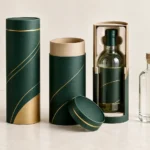
Branded cardboard tubes are cylindrical paper-based packaging designed with a company’s logo, colours, graphics, product information, or other brand elements.
They can be used as presentation packaging, retail packaging, gift packaging or, where the construction is suitable, packaging for products that need greater protection during delivery.
Unlike standard rectangular boxes, the curved structure creates a different visual and tactile experience. That can be useful for businesses selling candles, cosmetics, gifts, rolled products, promotional items, and other products that suit a cylindrical format.
The important point is that the branding should support the structure. A good tube design considers how the artwork wraps around the cylinder, where the lid opens, where the customer will look first, and which information needs to remain easy to read.
How to Choose the Right Cardboard Tube Size
The first decision should be the product fit, not the logo or artwork.
Start by measuring the product in the condition it will actually be packed. Include any cap, closure, sleeve, protective layer, or component that changes its final size.
For a cylindrical product, the internal tube diameter is particularly important. For irregular products, identify the widest point and consider how the product will be inserted and removed.
A useful measurement process is:
- Measure the widest part of the packed product.
- Measure the complete packed height.
- Include caps, lids, labels or protective components.
- Consider whether an insert will change the usable space.
- Allow suitable product clearance for insertion and removal.
- Check the final size with a physical sample where fit is critical.
Competitor buying guides place similar emphasis on starting with the actual packed product rather than designing from artwork. Big Tubes, for example, advises measuring the product’s widest point and packed height and considering clearance, inserts, and the opening style before confirming the final tube size.
Why Product Clearance Matters
A tube that is too tight can make the product difficult to insert or remove. A tube that is too loose can allow movement inside the packaging.
For example, imagine a glass cosmetic bottle that fits the tube diameter but moves from side to side during handling. The nominal dimensions may look correct, but the practical fit is not.
On the other hand, adding excessive space can make the packaging unnecessarily large and may require additional internal support.
The aim is not to create the biggest possible tube. It is to create enough working space for the product, closure, and any planned insert without leaving unnecessary movement.
A Simple Cardboard Tube Size Guide
When preparing a tube specification, think in terms of:
Internal diameter + usable height + clearance + closure + insert
The exact dimensions should be confirmed from the finished product rather than estimated from an online product listing or photograph.
This is particularly important for bottles, jars, candles, gift sets and products with uneven shapes.
Cardboard Tube Materials and Wall Construction
Material choice affects the appearance, rigidity, weight, and intended use of the packaging.
Kraft cardboard tubes can create a more natural visual style, while smoother or coated outer surfaces can provide a suitable base for detailed branded artwork. More rigid constructions can create a firmer premium feel, while corrugated constructions may be more appropriate where shipping protection is more important.
There is no single material that is automatically right for every tube.
Consider:
- Product weight
- Fragility
- Delivery conditions
- Desired presentation
- Print requirements
- Closure style
- Insert requirements
- Storage space
- Quantity being ordered
Wall thickness is another part of the specification. A thicker construction may provide additional rigidity, but the requirement should be based on the product and handling conditions rather than simply choosing the thickest available option.
Specialist tube manufacturers also distinguish between the tube body, outer printed wrap, and closure construction. Big Tubes, for example, describes different paperboard constructions and explains how the opening style changes the overall tube specification.
At 99 Custom Boxes, available packaging stocks listed for custom tube packaging include kraft, E-flute corrugated, Bux board, cardstock, uncoated white cardboard, and rigid stock. The exact suitability of each material should be confirmed against the final tube structure and product.
Cardboard Tubes With Lids: Which Closure Should You Choose?
The closure changes how the customer opens the package and can also affect the usable height, proportions, and artwork.
Butt Joint Tube
A butt joint design uses a lid that meets the body at a defined joint.
This can create a compact, clean-looking closure and can work well when the opening needs to be simple and visually controlled.
Telescopic Cardboard Tubes
Telescopic tubes use sections that slide over one another.
The overlap between the lid and body needs to be considered when calculating the finished structure. The opening can also create a longer reveal as the lid is removed, which may suit premium presentation packaging.
Tubes With Separate End Caps
End caps can be used where the packaging needs a distinct closure at one or both ends. The correct option depends on the product, the required strength, and how the tube will be opened.
Why Closure Choice Matters
Do not choose a lid simply because it looks attractive.
Consider:
- How often the package will be opened
- Whether the product needs a snug or easy-release fit
- How much internal height the closure uses
- Whether the closure affects artwork placement
- Whether the product needs additional protection
- Whether the tube is presentation packaging or needs to withstand delivery
Current specialist tube guides make the same distinction: butt-joint, telescopic and metal-lid constructions are not simply visual variations; they change the opening experience and the overall packaging specification.
Printing Branded Cardboard Tubes
Printing is where the tube becomes part of the brand identity.
Common printed elements include:
- Logo
- Product name
- Brand colours
- Patterns
- Illustrations
- Product information
- Care or usage instructions
- QR codes
- Promotional messaging
However, printing a tube presents a different design problem from printing a flat carton. The artwork wraps around a curved surface, so the placement of important information needs to be planned carefully.
CMYK Tube Printing
CMYK printing can be suitable for detailed, full-colour artwork, photographs, gradients and designs containing several colours.
It is a useful option when the artwork relies on visual richness rather than a small number of fixed brand colours.
Pantone Colour Matching
Pantone or PMS colours can be useful when consistent brand colours are particularly important.
For example, a company with a distinctive corporate colour may want that colour reproduced consistently across its packaging range.
The best choice depends on the artwork, printing process, substrate and required colour result rather than a simple rule that one method is always better.
Printed Tube Artwork Dieline
A cardboard tube artwork dieline provides the structural dimensions that the designer needs before final artwork is prepared.
The design should account for:
- Finished tube dimensions
- Print area
- Safe areas
- Seams or joins
- Lid and body separation
- Text placement
- Barcode positioning
- Bleed
- Any areas where artwork should not be placed
Do not design the finished tube from an assumed circumference. The production dieline should be the reference for final artwork.
Our existing Custom Box Printing Guide already covers the broader packaging workflow from dimensions and dielines through colour specification, printing, finishing and proofing. The same production logic is useful here, but tube artwork also needs to account for the curved surface.
Premium Finishes for Branded Tubes
A plain printed tube and a premium finished tube can create very different brand experiences even when they use the same basic artwork.
Available finishes can include:
Foil Stamping
Foil can be used to highlight a logo, product name, or selected detail.
It is often more effective as an accent than as a design element covering every available surface.
Embossing and Debossing
Embossing raises selected elements from the surface, while debossing creates an impression into it.
Both can add a tactile element that customers notice when handling the package.
Spot UV
Spot UV applies a gloss effect to selected areas rather than the entire surface. It can be used to draw attention to a logo, pattern, or particular part of the design.
Matte, Gloss and Soft-Touch Finishes
Matte finishes can create a softer appearance, while gloss can increase visual brightness. Soft-touch finishes can add a smoother tactile quality.
The choice should reflect the brand and product rather than simply adding every available finish.
99 Custom Boxes currently lists options including matte and gloss lamination, soft touch, Spot UV, foil, embossing, and debossing for its custom tube packaging specification.
Cardboard Tube Inserts: When Do You Need One?
The tube controls the outside shape, but an insert can control what happens inside.
An insert can help:
- Keep a product centred
- Reduce movement
- Separate multiple items
- Hold a bottle or jar upright
- Improve presentation
- Create a more controlled unboxing experience
Common approaches include card platforms, shaped supports, foam, base pads and other fitted internal components.
The important question is not simply whether an insert looks premium. It should solve a real packaging problem.
For example, a fragile glass candle may need more controlled support than a lightweight textile product. A gift set containing several small items may need dividers or a fitted platform to prevent the contents from moving into one another.
99 Custom Boxes also provides packaging insert options and describes physical sampling as available on request, which can be useful when the final fit needs to be tested before a full production order.
Branded Cardboard Tubes for Different Products
The same tube specification will not suit every product category.
Cosmetics and Skincare
Cosmetic packaging often needs a clean presentation surface for branding and product information. The tube diameter should account for the bottle, jar, applicator or other packed item, while the closure should make the product easy to remove.
Candles
Candle packaging usually needs enough clearance around the vessel and a stable base. An insert may help reduce movement, especially if the container is heavier or fragile.
Gifts
Branded gift tubes can make the package itself part of the gifting experience. A carefully chosen closure, internal support, and premium finish can create a more controlled reveal.
Posters and Rolled Products
Poster and artwork tubes have different priorities. The internal diameter needs to accommodate the rolled product without making insertion unnecessarily difficult, while the construction needs to match the delivery environment.
Small-Business Products
For small businesses, the main challenge is often balancing appearance, quantity, and cost.
A practical approach is to start with the product dimensions, choose the simplest structure that solves the packaging problem, then add printing, inserts, or finishes where they provide a clear benefit.
This is consistent with the wider guidance in your existing small-business packaging content: packaging decisions should be based on product characteristics, protection, final packed dimensions, and how the package will be handled.
Branded Cardboard Tubes vs Boxes
A tube is not automatically better than a conventional box. The right format depends on the product and the packaging job.
A cardboard tube may make more sense when:
- The product naturally suits a cylindrical format
- A distinctive presentation is important
- You want the shape itself to contribute to branding
- The product is rolled or cylindrical
- A particular opening experience is desirable
A box may make more sense when:
- The product is rectangular
- Efficient stacking is important
- Multiple products need to be arranged together
- The packaging needs a conventional rectangular footprint
- A large amount of information needs to be positioned on flat panels
The decision should come back to product fit, protection, presentation, storage, and delivery rather than choosing a format simply because it looks more premium.
What Affects the Cost of Branded Cardboard Tubes?
There is no single price for custom tube packaging because the specification changes from project to project.
The main factors include:
- Tube dimensions
- Wall construction
- Material
- Order quantity
- Closure type
- Print coverage
- Colour requirements
- Inserts
- Lamination
- Foil
- Embossing or debossing
- Spot UV
- Sampling
- Delivery requirements
A small order with simple printing can require a different production process from a larger order with multiple finishes and a custom insert.
99 Custom Boxes currently lists custom and standard sizes and quantities from 100 units on its Custom Tube Packaging page. The page also lists multiple materials, printing methods, finishing options, and proofing choices.
For a fair supplier comparison, ask for quotations based on the same dimensions, quantity, materials, printing, and finishes.
How to Prepare a Cardboard Tube Packaging Brief
A complete brief can make the quotation and design process much easier.
Include:
- Product dimensions
- Product weight
- Required internal diameter
- Packed height
- Expected quantity
- Preferred material
- Closure preference
- Print requirements
- Brand colours
- Finish requirements
- Insert requirements
- Target delivery date
If the product has an unusual shape, provide a physical sample or accurate measurements where possible.
The more clearly the packaging problem is defined, the easier it is to decide which specifications actually matter.
Check the Artwork Before Production
Proofing is an important stage because a good-looking screen design does not automatically mean the physical tube will look exactly as expected.
Check:
- Logo position
- Text readability around the curve
- Colours
- Bleed and safe areas
- Seam placement
- Lid and body artwork
- Barcode position
- Finish placement
- Any small text or essential product information
A 3D mock-up can help you understand how the artwork will wrap around the tube. A physical sample can be even more useful when product fit, colour, or construction is critical.
The Custom Tube Packaging page currently lists a free box template, flat view, 3D mock-up, and physical sampling on request among its proofing options.
Common Mistakes to Avoid
Starting With Artwork Instead of the Product
The artwork cannot fix an incorrect tube size. Confirm the packed product dimensions first.
Leaving Too Much Clearance
An oversized internal space can allow unnecessary product movement and make the packaging feel less controlled.
Ignoring the Closure
The lid takes up physical space and affects both the opening experience and artwork layout.
Treating All Cardboard Tubes as Equally Strong
Tube construction varies. The appropriate wall construction depends on the product, handling, and delivery requirements.
Designing Without the Dieline
A flat artwork file created without the final structural template can lead to alignment problems around the tube.
Adding Too Many Finishes
Foil, Spot UV, embossing, and other finishes can create useful visual or tactile effects, but adding them without a clear purpose increases complexity.
Skipping the Sample Where Fit Matters
If the product is valuable, fragile, unusually shaped, or difficult to measure accurately, test the finished packaging before committing to a larger production run.
Choose Branded Cardboard Tubes Around the Product
The strongest branded cardboard tube projects start with the product rather than the packaging trend.
Confirm the internal diameter and height. Allow sensible product clearance. Choose the material and wall construction according to the protection required. Select a closure that works for the product and opening experience. Then build the artwork around the actual dieline and choose printing and finishes that support the brand.
For UK businesses that need custom tube packaging, 99 Custom Boxes offers custom and standard sizes, multiple packaging materials, printing methods, finishes, inserts, and design/proofing support.
When requesting a quotation, provide the product dimensions, quantity, preferred structure, and branding requirements. That gives the packaging team a practical starting point for recommending a suitable specification.
Frequently Asked Questions
1. What size should branded cardboard tubes be?
The tube should be sized around the actual packed product. Start with the widest product dimension and packed height, then account for product clearance, inserts, and the selected closure. A physical sample is useful when the fit is critical.
2. What is the difference between a butt joint and telescopic tube?
A butt joint tube uses a lid that meets the body at a defined joint. A telescopic tube uses sections that slide over one another. The choice affects the opening experience, proportions, and artwork layout.
3. Are branded cardboard tubes suitable for cosmetics?
They can be used for suitable cosmetic and skincare products when the dimensions, internal support, material, and closure are specified for the product. The packaging should also leave sufficient space for the required product information.
4. Can cardboard tubes be printed with brand colours?
Yes. Depending on the production method and specification, tube packaging can use CMYK, Pantone/PMS or spot colours. The appropriate method depends on the artwork and desired colour control.
5. Can branded tubes have foil or embossing?
Premium finishes such as foil stamping, embossing, debossing and Spot UV can be incorporated into suitable tube packaging specifications. These should be planned from the artwork and production requirements rather than added at the last stage.
6. Do cardboard tubes need inserts?
Not always. An insert is useful when it needs to control movement, hold the product in a specific position, separate several items, or improve the presentation.
7. What information do I need to Request a quote?
Provide the product dimensions, packed height, quantity, preferred material, closure, printing, finishes, insert requirements, and delivery timeframe. Artwork or design requirements can also be supplied where available.
8. What is the minimum order for custom tube packaging?
The current 99 Custom Boxes product page lists quantities starting from 100 units. The appropriate quantity and final production requirements should be confirmed during quotation.
9. Should I request a sample before a larger order?
A sample is worth considering when product fit, colour, structure, or finishing is important. It can reveal problems that are difficult to identify from artwork alone.
10. Can branded cardboard tubes replace standard boxes?
They can be an alternative when the cylindrical format suits the product and the required presentation or protection. A standard box may still be more practical for rectangular products, efficient stacking, or multi-product arrangements.