
 United States
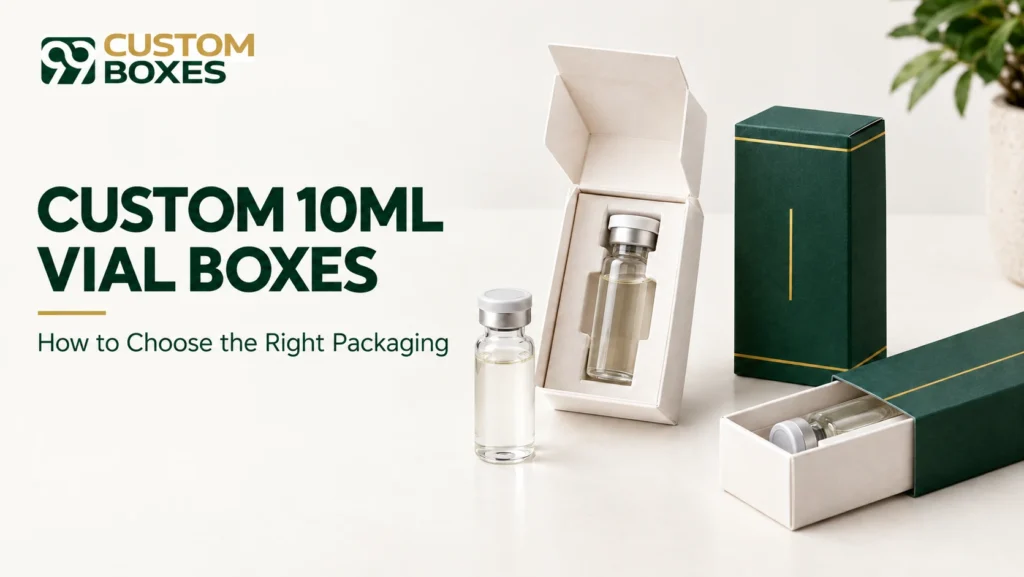
Choosing the right packaging for a 10 ml vial starts with its actual dimensions, not simply its liquid capacity. The vial’s height, diameter, closure, label, and intended use all influence which box structure and internal fit are suitable. Getting these details right helps you specify packaging that fits the product, presents it appropriately, and supports how it will be handled or transported.
For UK businesses ordering custom 10ml vial boxes, the main decisions are the box dimensions, insert design, material, printing requirements, order quantity and whether the packaging is intended for retail presentation, storage or shipping.
This guide explains how to evaluate those options and what to prepare before requesting a quotation from a packaging supplier.
1. How to Measure a 10 ml Vial for Packaging
Two vials with the same 10 ml capacity can have different external dimensions. Their body shapes, shoulders, caps, and closures may vary, so using the nominal capacity alone to determine the box size can result in a poor fit.
Before choosing your 10ml vial box dimensions, measure the actual vial you intend to package.
Check the following measurements
Overall height: Measure from the bottom of the vial to its highest point, including the cap or closure. This is particularly important if the closure extends above the main body.
Body diameter: Measure across the widest part of the vial body. If the vial has a shoulder, a wider base, or a protruding feature, record that as well.
Cap or closure diameter: Check whether the cap is wider than the vial body. The internal opening and insert must accommodate the complete product, not just its glass container.
Label and other external features: Measure the vial in its finished state where possible. Labels, protective bands, and other attached components may affect the space required.
Number of vials: Decide whether the box will hold one vial or several. Multiple vials need sufficient space for the selected insert and any separation between compartments.
If your products vary slightly in size, measure representative units and tell your supplier about the variation. The design should account for the actual products being packed rather than assuming every unit is identical.
Internal dimensions matter
When discussing custom packaging, confirm whether the supplier is asking for the vial dimensions, the required internal box dimensions, or the external box dimensions.
The internal space must accommodate the vial and any insert. The insert must then hold the vial appropriately without making loading or removal unnecessarily difficult.
Avoid adding an arbitrary amount of extra space to your measurements. The suitable clearance depends on the box structure, insert design, and intended use.
Providing measurements in millimetres, along with clear photographs or a technical drawing where available, makes the specification easier to review.
2. Choose a Box Style That Suits the Product
Once the dimensions are established, consider how the box will be opened, packed, stored and presented.
Different box constructions suit different purposes. A practical shipping pack may prioritise handling and space efficiency, while a presentation box may place greater emphasis on appearance and the opening experience.
Tuck-end cartons
Tuck-end cartons are folding boxes with closing flaps. They may suit products that need compact retail packaging or a straightforward carton structure.
When considering this design, check how the vial will sit inside the carton and whether an additional insert is needed to maintain its position.
Tray-and-sleeve boxes
A Tray-and-sleeve design combines an inner tray with an outer sleeve. It may be suitable when the product needs a more organised presentation or a separate insert arrangement.
Consider how the tray holds the vial, how the sleeve fits around the assembled pack, and how much space the packaging occupies during storage.
Rigid boxes
Rigid boxes offer a more structured presentation and may be worth considering for premium products or carefully arranged vial sets.
However, a rigid structure is not automatically the best choice. It may require more storage space and a different budget from a folding carton. Choose it when the structure and presentation justify those trade-offs.
Single-vial and multi-vial packaging
A single-vial box needs to accommodate one product and any supporting insert. A multi-vial box introduces additional decisions about compartment layout, spacing, orientation and the sequence in which products are packed.
Before approving either design, confirm the number of vials per box and whether each vial needs its own compartment.
The most suitable box style depends on the vial, insert and intended application. Confirm which constructions are available for your specific design before finalising the specification.
3. How to Choose the Right Insert for Vial Packaging
Vial boxes with inserts can help position the product inside the outer box. The appropriate insert depends on the vial’s dimensions, the number of units, how the pack will be handled and how easily the vial needs to be removed.
There is no universally best insert for every 10 ml vial.
Cardboard inserts
A suitably designed cardboard or paperboard insert can position a vial or divide a box into separate compartments.
This option may be worth considering when you need an insert integrated with a folding carton or want an organised arrangement without adding an unnecessarily complex structure.
Check that the insert supports the vial at appropriate points and does not interfere with its closure, label, or removal.
Foam inserts
Foam inserts can be cut or shaped around individual products. They may be useful when a layout needs individual recesses or when the vial’s shape makes a simple divider unsuitable.
Before selecting foam, confirm the appropriate material, cut-out dimensions, fit, and compatibility with the product and its handling requirements.
The additional insert design and production requirements should also be considered when comparing quotations.
Die-cut inserts and dividers
Die-cut inserts can be designed around a specific product layout. Depending on the construction, they may position one vial or create several compartments within a larger box.
For multi-vial packaging, consider the number of compartments, the available space around each vial, and whether the design allows products to be packed and removed easily.
Other insert materials may also be worth discussing with your supplier, but their availability and suitability should be confirmed rather than assumed.
How to assess insert fit
When reviewing an insert design, ask:
- Does the recess accommodate the vial’s body and closure?
- Can the vial be inserted and removed without unnecessary difficulty?
- Is each vial separated appropriately from neighbouring products?
- Does the insert remain correctly positioned inside the box?
- Is the layout practical for the people packing or using the product?
The aim is to achieve a considered fit, not simply to make the insert as tight as possible.
4. Cardboard or Foam Inserts: Which Should You Choose?
Choosing between cardboard and foam inserts for vial packaging involves more than comparing materials.
A cardboard insert may suit a simpler compartment layout, while a foam insert may offer greater flexibility for shaped recesses. The decision should reflect the product, construction, handling requirements, and budget.
Cardboard may be worth exploring when an organised layout and integration with the outer carton are priorities. Foam may be worth exploring when the insert needs to follow a particular vial shape.
Compare both options against the following considerations:
- Product fit: Can the insert accommodate the full vial, including its closure?
- Handling: Can staff pack and remove products efficiently?
- Protection requirements: Does the complete packaging design suit the expected handling and transport conditions?
- Presentation: Does the insert provide the desired appearance when the box is opened?
- Cost: How do the insert material, design, and production requirements affect the quotation?
- Practicality: Is the assembled pack convenient to store, pack and distribute?
For glass vials, the insert and outer box should be considered together. An insert cannot be evaluated independently of the structure surrounding it.
Do not assume that choosing foam automatically makes the package suitable for shipping, or that cardboard is inadequate for every fragile product. The finished design and its intended use determine whether the complete packaging system is appropriate.
5. Select Vial Packaging Materials According to Their Purpose
The material affects the box’s structure, appearance, print surface and suitability for the intended application.
The 99 Custom Boxes product page lists paper stocks and materials including Kraft, E-flute corrugated, Bux Board, cardstock, uncoated Super White cardboard and rigid stock. Confirm which options are suitable and available for the specific 10 ml vial design before placing an order.
Consider the following general differences when discussing your requirements with a supplier.
Paperboard and cardstock: These may suit folding cartons where a printable surface, compact structure, and product presentation are important. The finished performance depends on the selected stock, thickness and construction.
Corrugated board: E-flute corrugated is an option to discuss when the packaging design needs a corrugated structure. Its suitability depends on the vial, the insert and the conditions the pack must withstand.
Kraft stock: Kraft can be considered when its appearance and available construction suit the intended brand presentation.
Rigid stock: Rigid structures may suit presentation-led packaging where a more substantial box is desired. Consider the additional space, material and cost implications.
The material should not be selected on appearance alone. Consider how the product will be stored, handled and transported, as well as the printing and structural requirements.
When requesting a quotation, ask the supplier to explain which available materials fit your specification and why.
6. Plan Printing and Artwork Before Production
Printed vial boxes can help businesses present product information consistently and create a recognisable visual identity. Good artwork planning also reduces the risk of having to revise a design after the box structure has been prepared.
Before the artwork is finalised, consider what information needs to appear on the packaging.
Depending on the product and application, this could include the brand name, product name, product identification, instructions or other required information. Not every item applies to every vial, so establish the actual content requirements before designing the box.
Use the correct dieline template
A dieline shows the flat layout of the packaging before it is folded and assembled. It helps identify panels, fold or crease lines, cut lines and glue areas.
Use the template prepared or approved for the intended box construction rather than positioning artwork around an estimated layout.
Check that:
- Important text and logos are not positioned too close to cut or fold lines.
- Artwork stays within the supplier’s specified safe areas.
- Glue areas and structural features are not covered by critical content.
- The printed panels appear in the correct orientation when the box is assembled.
- Any required product information remains legible.
The exact bleed and safe-area requirements should come from the supplier’s artwork instructions.
Review the design before approving it
A flat template helps review the artwork layout, while a 3D mock-up helps you understand how the assembled box may look. A visual mock-up is not a substitute for checking the physical fit of the actual vial.
For medicine-related products, packaging artwork can have regulatory implications beyond branding. Confirm the content with the responsible regulatory or compliance reviewer and consult the MHRA’s guidance on medicine labelling and packaging where applicable.
7. Consider How the Vials Will Be Handled and Shipped
The packaging requirements for retail presentation are not necessarily the same as those for transport.
A retail box may be designed primarily to contain and present the vial. An outer shipping carton has a separate role in protecting the packed product during distribution.
If glass vials will be shipped, assess the complete packaging arrangement rather than relying on the individual box alone.
Consider whether the design:
- Keeps each vial appropriately positioned.
- Separates multiple vials where necessary.
- Reduces avoidable movement within the box.
- Fits sensibly within the outer shipping carton.
- Is appropriate for the expected handling and transport conditions.
Do not assume that a particular insert or carton guarantees damage-free delivery. Packaging performance depends on the complete design and the conditions it encounters.
Where products are particularly fragile or subject to specific transport requirements, discuss those requirements with the relevant packaging and logistics specialists before approving the design.
8. What Affects the Cost of Custom 10ml Vial Boxes?
The cost of custom vial boxes depends on the complete specification rather than the vial capacity alone.
Important factors to discuss with a supplier include:
Box dimensions: The required size influences the amount of material and the construction of the finished box.
Box style: Different structures involve different design and production requirements.
Insert design: A simple divider and a shaped insert may involve different materials and manufacturing steps.
Order quantity: The required number of boxes affects production planning and the quotation. Ask for pricing at realistic quantities that reflect your demand.
Printing and finishes: Artwork coverage, colour requirements and any additional finishes can affect the production specification.
Sampling and design work: Ask whether a sample, custom tooling or other preparation requirements involve separate charges.
Delivery arrangements: Confirm the delivery requirements and costs associated with your order rather than assuming they are identical for every specification.
For more background on these considerations, see the Custom packaging cost guide for the UK.
When comparing quotations, check that each supplier is pricing the same box dimensions, construction, insert, material, printing specification, quantity and delivery requirements. Otherwise, a lower quotation may represent a different package rather than a better price for the same product.
9. Check Minimum Quantities, Samples and Production Planning
Before confirming an order, make sure the proposed quantity and production process suit your business.
The 99 Custom Boxes product page currently lists custom vial packaging orders starting at 100 boxes. Confirm the minimum quantity, available configuration, and quotation for your specific requirements.
The Low-MOQ custom packaging guide can also help you consider quantity planning for a new or smaller packaging requirement.
When should you request a sample?
A physical sample can help you evaluate details that a drawing may not reveal fully, including:
- Whether the actual vial fits the insert.
- Whether the closure fits within the available height.
- Whether the box opens and closes as intended.
- Whether the vial can be packed and removed conveniently.
- Whether the assembled packaging meets your presentation requirements.
99 Custom Boxes lists physical sampling on request, with sampling charged separately. Confirm the available sampling process, cost, and timing for your design before proceeding.
A sample is particularly worth considering when the vial dimensions, insert arrangement or box construction are unfamiliar. Review the sample against the actual product rather than relying only on photographs or a digital mock-up.
Confirm the production schedule
Ask for the expected milestones separately, including artwork approval, sampling if required, production, and delivery. Confirm the schedule for the specific order before making commitments to your own customers.
Allow time to resolve issues with measurements or artwork before production begins. An early specification check is more useful than discovering a fit problem after a full order has been manufactured.
10. What to Prepare Before Requesting a Quote
A clear brief helps the packaging supplier understand what you need and identify which details require confirmation.
Before submitting an enquiry, prepare the following information:
- Vial measurements: Overall height, widest diameter, and closure dimensions, preferably in millimetres.
- Product photographs or drawings: Include views that show the vial’s shape and closure.
- Quantity: State how many boxes you need and whether you expect repeat orders.
- Box configuration: Confirm whether the pack holds one vial or multiple vials.
- Insert requirements: Explain how the vial should sit and whether separate compartments are required.
- Packaging purpose: State whether the box is intended for retail presentation, storage, or use within a larger shipping pack.
- Material and print preferences: Share any preferred appearance, artwork or finish, while remaining open to suitable alternatives.
- Artwork status: Explain whether print-ready artwork is available or the design still needs to be developed.
- Sample requirements: Say whether you need a physical sample before approving production.
- Required delivery date: Share your deadline so the supplier can confirm whether the proposed schedule is practical.
You do not need to know every technical specification before enquiring. Accurate product measurements, the intended use, and a clear description of the desired outcome provide a useful starting point.
Choose Custom 10ml Vial Boxes With the Right Fit
The right packaging begins with the actual vial and the purpose the box needs to serve. Accurate measurements help establish the dimensions, while careful consideration of the box structure, insert, material, artwork, and delivery requirements helps you develop a more complete specification.
If you are planning custom 10ml vial boxes for a cosmetic, laboratory, or other suitable application, review the available options on the Custom Vial Packaging Boxes product page.
Prepare your vial measurements, quantity, and packaging requirements, then Request a quotation to discuss the design and confirm which options are suitable for your order.
Frequently Asked Questions
1. What size box do I need for a 10 ml vial?
There is no single external box size that fits every 10 ml vial. Measure the complete vial, including the closure and any relevant external features, then determine the required internal space together with the insert design.
2. Should I use an insert for a 10 ml glass vial?
An insert may be useful when the vial needs to be positioned, separated from other products, or presented in a particular layout. The right design depends on the vial shape, number of units, and intended handling conditions.
3. Are cardboard inserts better than foam inserts?
Neither material is universally better. Cardboard may suit integrated dividers and straightforward layouts, while foam may be worth considering for shaped recesses. Compare fit, handling, presentation, material compatibility, and cost before deciding.
4. Can custom 10 ml vial boxes hold multiple vials?
Yes, multi-vial packaging can be designed around the intended number of units and their dimensions. Confirm the compartment layout, spacing, orientation, and insert requirements before approving the design.
5. Can I request a physical sample of custom vial packaging?
99 Custom Boxes lists physical sampling on request, and sample charges apply. Confirm the available sample process and cost for your specific box design before ordering.
6. What information do I need for a custom vial box quotation?
Provide the vial’s actual measurements, required quantity, preferred box configuration, insert requirements, intended use, and artwork status. Photographs or technical drawings can also help clarify the specifications.