
 United States
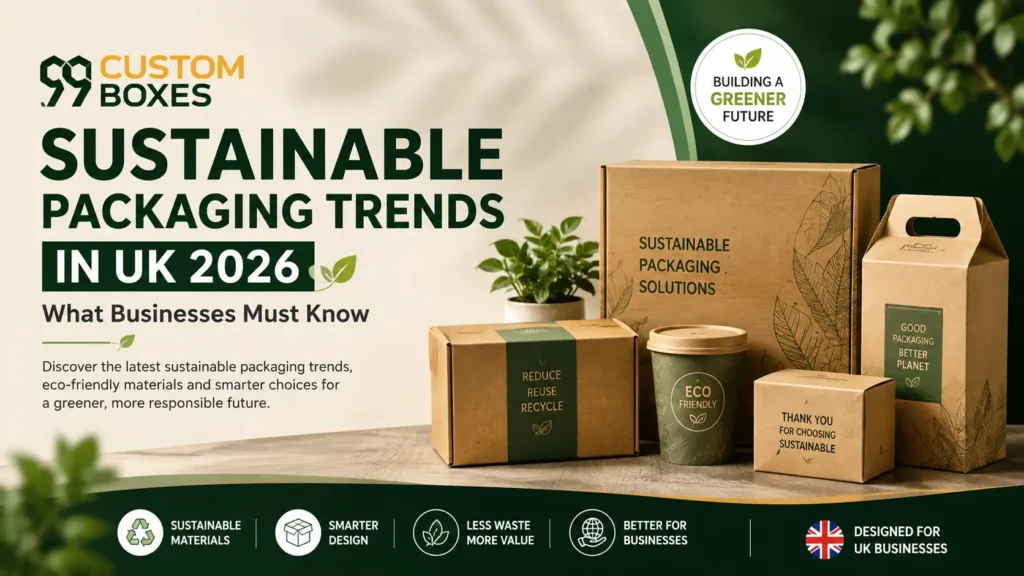
Sustainable Packaging Trends are changing how UK businesses choose, design and use packaging. The shift is not simply about replacing plastic with paper. Businesses are looking more closely at the amount of material used, how easy packaging is to recycle, what happens after disposal, and whether the pack still protects the product properly.
That last point matters. A package that uses less material but results in more damaged products, returns, or wasted stock is not automatically the better option. In 2026, the strongest approach is more practical: use the right material, the right structure and the right amount of packaging for the job.
For UK businesses, sustainability decisions also sit alongside changing packaging responsibilities. Extended Producer Responsibility (EPR) is now part of the UK packaging system, while Plastic Packaging Tax continues to apply to qualifying finished plastic packaging with less than 30% recycled plastic content.
The Sustainable Packaging Trends UK Businesses Need to Watch in 2026
The leading Sustainable Packaging Trends in 2026 are focused on better material choices, simpler packaging systems and less avoidable waste.
The most useful areas for businesses to watch are:
- More use of recycled packaging materials
- Greater interest in recyclable cardboard packaging
- Right-sized packaging that uses less board or paper
- Reduction of unnecessary plastic components
- Better separation of materials for recycling
- Greater attention to packaging carbon footprint
- More interest in reusable, refillable and circular packaging models
- Clearer disposal information for customers
- Packaging decisions influenced by EPR and wider producer responsibility
- Smarter packaging features where they provide a real function rather than decoration
Industry outlooks for 2026 also point toward next-generation materials, lighter packaging structures and digital or smart packaging, although these solutions are not equally suitable for every business or product.
The important lesson is simple: a sustainable package should solve a product and disposal problem, not just look environmentally friendly.
1. Why Recycled and Recyclable Fibre Packaging Is Gaining Ground
For many products, paperboard and corrugated packaging can offer a practical route toward lower plastic use.
This is especially relevant for ecommerce, retail, food, gifting and subscription products where the package needs to be printed, folded, stored and transported efficiently.
The words recycled and recyclable should not be treated as the same thing.
- Recycled packaging contains material recovered from previous use or production streams.
- Recyclable packaging is designed so its material can be collected and processed into new material where suitable recycling systems exist.
- A package can be recycled, recyclable, or both.
The finished structure matters too. A paperboard box with several permanently bonded materials may have different recycling characteristics from a simpler fibre-based design.
For businesses comparing sustainable packaging materials, fibre packaging is often a sensible starting point because it can combine printability, structure and product protection in one format. The final environmental outcome still depends on the board specification, coatings, windows, adhesives and local recycling arrangements.
99 Custom Boxes currently groups several kraft-based formats within its Eco Friendly Boxes collection, including kraft mailers, kraft tuck boxes, kraft sleeves and kraft auto-lock boxes.
2. Right-Sized Packaging: A Simple Way to Reduce Material Waste
A common mistake is to focus only on the material name.
A box that is made from a recyclable board can still be inefficient if it is much larger than the product inside. Excess space can require more board, extra void fill and more storage volume. It can also make the packaging harder to handle.
That is why reducing packaging material usage should be considered alongside material selection.
A useful rule is:
Start with the product dimensions, then design the packaging around the product rather than choosing a larger standard box and filling the gaps.
For ecommerce businesses, this can mean:
- Measure the product accurately.
- Account for necessary inserts or protective layers.
- Set practical internal dimensions.
- Check how the finished box will be folded and transported.
- Test the structure before ordering a large production run.
The packaging should still protect the product during handling and delivery. Cutting material too aggressively can create a false economy.
For accurate sizing, 99 Custom Boxes already has a dedicated resource on How to measure a box for custom packaging, which is useful when moving from sustainability goals to an actual packaging specification.
3. Plastic Reduction Starts With Better Packaging Design
Plastic-free packaging ideas are attractive, but “plastic-free” is not automatically the right answer for every product.
Some products need moisture barriers, grease resistance, sealing performance or other functional properties. Replacing one material with another without checking the whole packaging system can create new problems.
A better question is:
Where is plastic genuinely necessary, and where is it being used because the packaging system has not been redesigned?
Possible approaches include:
- Removing unnecessary plastic windows or components
- Using fibre-based structures where they meet product requirements
- Simplifying multi-material packaging
- Reducing decorative packaging layers
- Reviewing inserts and protective components
- Choosing a package that can perform several functions at once
This is where plastic alternatives for packaging become a design question rather than a simple material swap.
For UK businesses that sell products online, a strong approach is often to review the complete pack from outside to inside instead of changing only one component.
4. Choosing Kraft Packaging for the Right Reasons, Not Just the Look
Kraft has become closely associated with Eco-Friendly Packaging Ideas. Its natural brown appearance can communicate a simple, responsible brand image, but colour alone does not determine environmental performance.
The actual packaging specification matters.
Consider:
- What board is being used?
- Does it contain recycled content?
- Is the structure easy to separate?
- Are coatings necessary?
- Is there a plastic window?
- Are different materials permanently combined?
- How much material is needed for the required strength?
This distinction helps businesses avoid green-looking packaging that has not been properly assessed.
For example, a simple kraft carton may make more sense for a lightweight product than a heavily decorated rigid structure with several added components. On the other hand, a fragile or premium product may genuinely require stronger construction.
The right decision depends on function.
For ecommerce brands, Custom Kraft Mailer Boxes can be relevant where the outer pack needs to combine shipping protection, branding and a kraft-based presentation. The product page currently describes custom sizing and kraft options for ecommerce, retail and subscription shipments.
5. Sustainable Packaging Starts With Using Materials More Efficiently
One of the most useful Sustainable Packaging Examples is not a new material at all. It is a better-designed package.
A package can become more efficient through:
- Fewer components
- Smaller dimensions
- Lighter board where practical
- Folded structures that require less material
- Multi-purpose inserts
- Better product fit
- Reduced void space
- Fewer unnecessary decorative elements
This matters because sustainability is influenced by the entire packaging system, not one isolated feature.
A useful decision framework is the F-I-T test:
| Factor | Question to ask |
| Function | Does the package protect the product properly? |
| Impact | Does it reduce unnecessary material, waste, or difficult-to-manage components? |
| Transit | Will it work through storage, handling and delivery? |
A package that performs well on all three is usually a stronger starting point than one selected only because it uses a fashionable material.
6. Recyclable vs Compostable Packaging: Which Option Makes More Sense?
There is no universal winner between recyclable and compostable packaging.
Recyclable packaging is intended to enter a recycling system and have its material recovered for further use.
Compostable packaging is designed to break down under defined composting conditions. That does not mean it will necessarily break down in a typical household bin or local waste system.
The choice should depend on the product, packaging construction and realistic disposal route.
| Consideration | Recyclable packaging | Compostable packaging |
| Main route | Recycling | Composting |
| Best question | Can the material be effectively recycled? | Is suitable composting infrastructure available? |
| Material design | Often favours simpler structures | Must meet relevant compostability requirements |
| Customer disposal | Depends on local recycling collection | Depends on suitable composting facilities |
| Main risk | Assuming “recyclable” means universally accepted | Assuming “compostable” means it can go anywhere |
UK packaging specialists continue to stress that recyclable and compostable are different disposal routes, and that the choice should consider the product, customer and available waste infrastructure.
For many mainstream cardboard boxes, the recycling route may be more practical than adding a compostable component that customers cannot dispose of correctly.
7. Sustainable Packaging for Small Businesses: Balancing Cost and Flexibility
Small businesses face a different packaging problem from large manufacturers.
They may have:
- Smaller order volumes
- More frequent product changes
- Limited storage space
- Seasonal products
- Multiple product sizes
- Less room for packaging waste
That makes flexibility especially important.
For a new product, ordering a huge quantity of one packaging format can become wasteful if the product, branding, or dimensions change six months later.
A better approach may be to:
- Start with the most important product size.
- Keep the structure simple.
- Avoid unnecessary finishes.
- Test the packaging before committing to a long production run.
- Expand into additional sizes only when demand supports them.
This is one reason low-volume or flexible custom packaging can be useful for smaller brands. It allows the packaging system to develop alongside the product range rather than locking the business into one oversized specification.
8. How Ecommerce Businesses Are Rethinking Sustainable Packaging
Sustainable packaging for eCommerce needs to survive more than a shelf.
The parcel may pass through fulfilment areas, vans, sorting hubs and repeated handling before reaching the customer. A package that looks sustainable but fails during shipping creates a different type of waste through damaged products, replacement orders and returned goods.
That is why ecommerce packaging should be assessed across the full journey.
A practical checklist includes:
- Is the box close to the product size?
- Does the board provide enough protection?
- Is void fill being overused?
- Can the package be assembled efficiently?
- Are unnecessary plastic components present?
- Can customers understand how to dispose of the packaging?
- Does the structure work for the expected shipping conditions?
For brands selling directly online, Custom Mailer Boxes are one existing packaging option on the 99 Custom Boxes site, while the custom kraft mailer boxes page focuses specifically on kraft-based mailer formats.
9. Building Better Retail Packaging Without Losing Shelf Impact
Sustainable packaging does not stop at delivery.
Retail packaging needs to protect the product while working on shelves, counters and displays. That means businesses often have to balance material efficiency with visibility, rigidity and branding.
A lightweight fibre structure may work for one product but not another. A retail display may require more structural strength than a simple product carton.
99 Custom Boxes lists Custom Retail Boxes with kraft and other board options, while its Custom Display Boxes page includes sustainable options for shelf, counter and point-of-sale applications.
For brands selling through physical retail, sustainability should therefore be assessed alongside:
- Shelf stability
- Product visibility
- Structural strength
- Storage efficiency
- Print requirements
- End-of-life considerations
10. Why Packaging Carbon Footprint Matters More in 2026
Businesses often compare packaging by material name alone. A more useful approach is to think about the packaging carbon footprint across the wider lifecycle.
Questions include:
- How much raw material is required?
- How heavy is the finished package?
- How much packaging is needed per product?
- How far does it travel?
- Does it require additional protective material?
- Can the material be recovered after use?
- Does the design create avoidable waste?
There is no single material that is automatically the lowest-impact option in every situation.
A heavier package made from a different material may not be preferable simply because it sounds more sustainable. Likewise, a lightweight plastic component is not automatically better because it uses less material.
The comparison needs context.
11. How UK Packaging Regulations Are Changing Sustainability Decisions
Sustainability is no longer only a branding issue.
The UK’s EPR system places packaging responsibilities on relevant producers and is designed to connect packaging placed on the market with the costs of managing packaging waste. PackUK’s 2026–27 operational plan also sets out ongoing work around the scheme, including fees and implementation.
For some businesses, Plastic Packaging Tax is also relevant. From 1 April 2026, the published rate is £228.82 per tonne for qualifying finished plastic packaging containing less than 30% recycled plastic, subject to the rules, exclusions and exemptions.
This does not mean every business should immediately replace every plastic component with cardboard.
It does mean packaging teams should understand:
- What materials they are buying
- How much packaging they place on the market
- Which components are recyclable or difficult to recover
- Whether packaging data is being recorded accurately
- Whether packaging design can reduce unnecessary material use
For businesses working through UK EPR requirements, the existing UK EPR Packaging Rules 2026 resource provides a useful internal reference point for the compliance side of packaging decisions.
12. Circular Economy Packaging: From Using Less to Using Better
The idea of circular economy packaging is broader than simply reducing waste.
A circular approach asks what happens to the material after the product is used. Can it be recovered? Can it stay in circulation? Can the packaging be reused or redesigned to use fewer virgin resources?
That creates several possible strategies:
- Use recycled feedstock where technically suitable.
- Design packaging for a realistic recycling route.
- Reduce unnecessary material.
- Avoid difficult combinations when a simpler structure can work.
- Consider reuse where the business model supports it.
- Choose durability where repeated use has a real advantage.
Not every business needs reusable packaging. For some products, a simple recyclable carton may be more practical.
The goal is not to follow one sustainability trend. The goal is to choose the packaging system that creates the fewest avoidable problems across its lifecycle.
Common Sustainable Packaging Mistakes That Can Cost Businesses
Some sustainability decisions fail because the business starts with the marketing claim instead of the packaging problem.
Don’t Confuse a “Green” Look With Real Sustainability
Brown kraft, plant imagery and environmental wording do not prove that the finished package is better environmentally.
Don’t Replace Plastic Until You Check Product Performance
A material change can affect moisture protection, grease resistance, strength or shelf life. Packaging needs to work before it can be considered a good solution.
Ignoring Size
An oversized recyclable box can still create unnecessary material and transport inefficiency.
Avoid Making Sustainability Claims Your Packaging Cannot Support
Claims should match the actual packaging specification. A business should be able to explain what material it uses and how customers should dispose of it.
Recyclable and Compostable Are Not the Same Thing
They follow different waste routes and should be selected based on realistic disposal conditions.
Don’t Reduce Protection So Far That Products Start Breaking
If the product becomes more likely to break in transit, the packaging strategy has gone too far.
How to Choose the Right Sustainable Packaging for Your UK Business
The best sustainable packaging depends on the product rather than a single “greenest” material.
| Business need | Packaging direction worth investigating |
| Ecommerce shipping | Right-sized mailer or corrugated format |
| Lightweight retail goods | Recyclable paperboard or kraft carton |
| Premium presentation | Efficient rigid or tray-and-sleeve structure with carefully chosen materials |
| Food and takeaway | Fibre-based formats suited to the product and use |
| Small product ranges | Flexible custom formats that can scale with demand |
| Retail displays | Corrugated display structures designed for strength and material efficiency |
| Simple branding | Minimal printed packaging with fewer unnecessary components |
A useful next step is to compare the product requirements, material, structure, disposal route, and total packaging volume together. That gives a much clearer picture than choosing a package because one word on the specification sounds sustainable.
For example, 99 Custom Boxes offers Custom Tray and Sleeve Boxes with kraft and other material options, making that structure relevant for brands that need a combination of presentation and material choice.
How UK Businesses Can Make Packaging More Sustainable
A practical starting point for most UK businesses is:
- Measure the product first.
Avoid designing around oversized standard packaging. - List every packaging component.
Include the box, insert, window, tape, sleeve, label and protective filler. - Remove what the product does not need.
Fewer components can simplify both the customer experience and disposal. - Compare material options by function.
Look at strength, barrier needs, printability, weight and end-of-life route. - Check the full structure.
A recyclable main box can still have less straightforward components attached to it. - Test before scaling.
Check fit, protection, assembly and shipping performance before committing to a large production run. - Give customers clear disposal information.
Sustainability depends partly on what happens after the sale.
This approach works better than chasing every new packaging trend because it keeps the decision tied to the actual product.
Where Sustainable Packaging Is Heading After 2026
The Future of Sustainable Packaging is likely to combine several approaches rather than revolve around one replacement material.
Expect continued attention on:
- Lower material use
- Recycled feedstocks
- Recyclability by design
- Better fibre-based structures
- Plastic reduction
- Reuse and refill models where practical
- Smarter packaging and digital information
- Better packaging data
- More pressure to account for end-of-life outcomes
Recent 2026 industry outlooks also identify innovation, packaging recovery and policy as major forces shaping the next stage of packaging development.
For UK businesses, the most useful trend may be less dramatic: packaging decisions are becoming more measurable.
Material choice, pack weight, dimensions, recyclability, waste handling and regulatory responsibilities are increasingly connected. That gives businesses a stronger reason to design packaging as a system rather than treating the box as a final branding step.
Frequently Asked Questions
1. What is the most sustainable packaging material?
There is no single best material for every product. The better choice depends on product protection, material quantity, manufacturing, transport and realistic end-of-life options.
2. Is kraft packaging sustainable?
Kraft can be a useful packaging material for businesses seeking fibre-based or recycled options, but the sustainability of the finished pack depends on the board, coatings, windows, adhesives and overall structure.
3. Is recyclable packaging better than compostable packaging?
Not automatically. Recyclable packaging relies on suitable recycling systems, while compostable packaging requires appropriate composting conditions. The right option depends on the product and disposal route.
4. How can a small business reduce packaging waste?
Start with right-sized packaging, remove unnecessary components, choose materials based on actual product needs, and avoid ordering more packaging than the business can reasonably use.
5. What is the most important sustainable packaging trend in 2026?
For many businesses, the biggest practical shift is toward better-designed packaging that uses materials more efficiently and has a clearer end-of-life route, rather than simply replacing one material with another.
Sustainable packaging is becoming less about making a package look environmentally responsible and more about making the whole packaging system work responsibly. For a UK brand, that means balancing product protection, material efficiency, customer experience, recycling, cost and regulatory responsibilities.
When the packaging specification is clear, the next step is to test the right structure and material for the product. 99 Custom Boxes offers a range of kraft, mailer, retail, display, and other custom packaging formats that can be reviewed against those requirements.
Explore Eco-Friendly Boxes or Request a custom packaging quote based on your product, size, and packaging needs.